.svg)

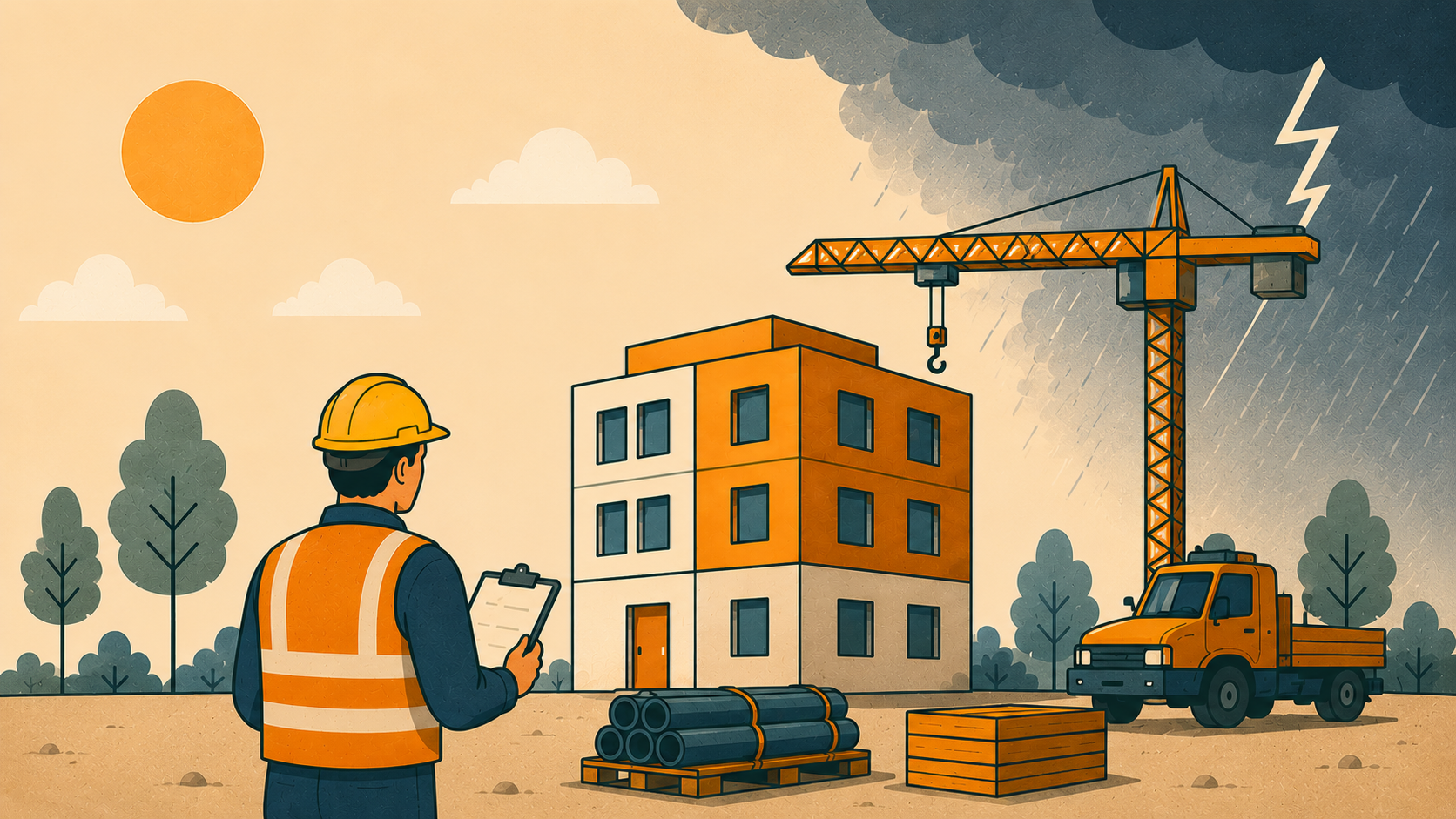
Construction professionals are experts at managing schedules, manpower, materials, and deadlines. Unfortunately, Mother Nature doesn't always cooperate with the project schedule.
Extreme weather events are becoming more frequent and more severe. Whether it's a heat wave, flash flood, high winds, freezing temperatures, or severe storms, weather-related hazards can quickly turn a productive jobsite into a dangerous one.
Heat waves can lead to dehydration, heat exhaustion, and heat stroke. Heavy rain can create slippery surfaces, flood excavations, and undermine soil stability. High winds can turn unsecured materials into airborne hazards. Even drought conditions can create unstable ground conditions and increase fire risk.
The key to weather safety is preparation. Supervisors should monitor weather forecasts daily, especially through reliable sources such as NOAA. Workers should be trained on emergency procedures before hazardous conditions occur, not during them.
When severe weather threatens a project, don't hesitate to pause operations. No deadline is worth risking a life. Establish evacuation routes, emergency communication procedures, shaded rest areas, and emergency supplies before they are needed.
Finally, secure the site. Materials, equipment, temporary structures, and debris should be protected before severe weather arrives.
Extreme weather is no longer a rare event—it's part of modern construction. The safest crews aren't the ones who react the fastest; they're the ones who prepared before the storm arrived.
Stay alert. Stay prepared. Stay safe.