.svg)

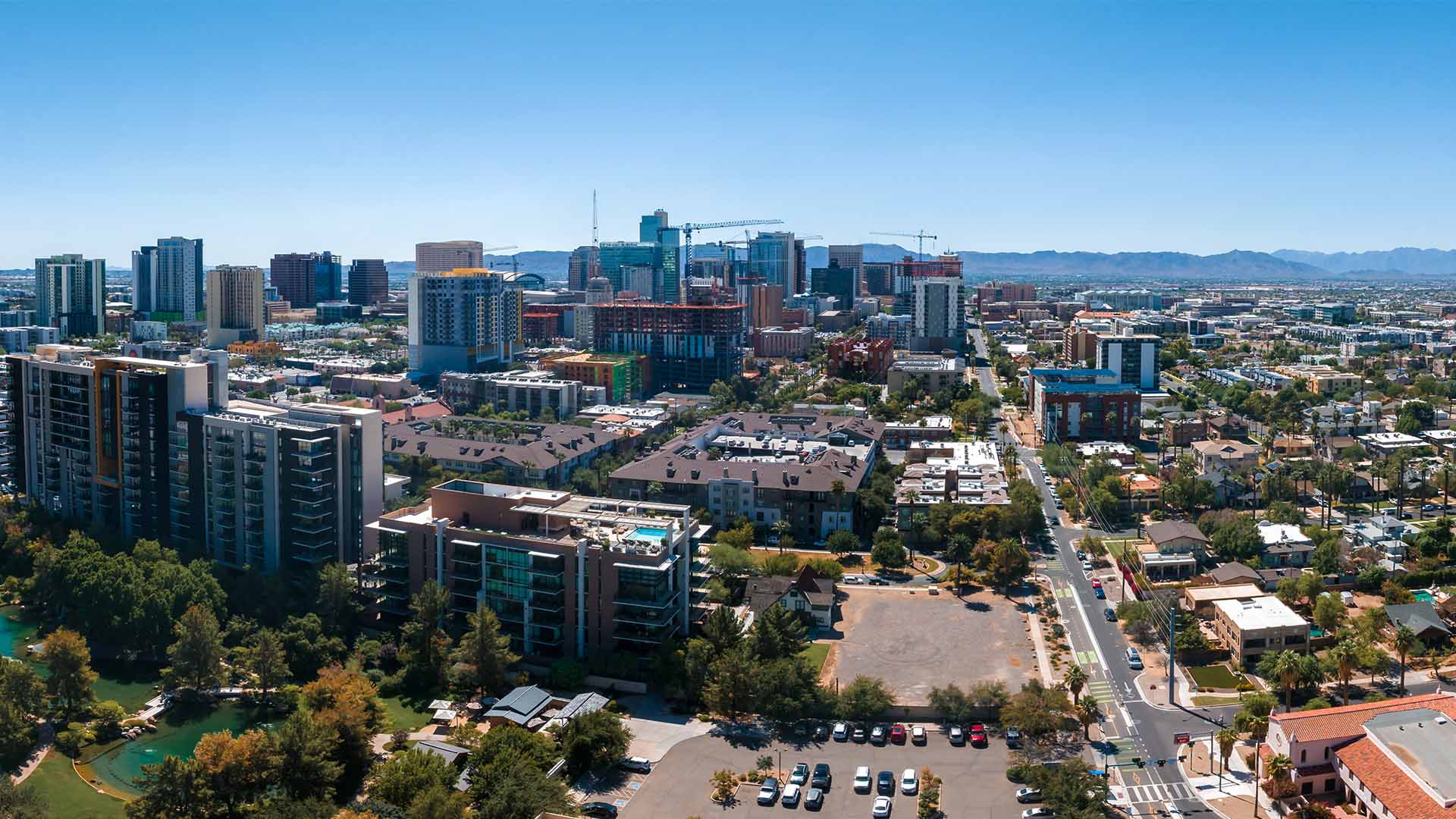
Arizona continues to experience significant growth across industrial, retail, commercial, and other market sectors. New opportunities are emerging throughout the state, but turning those opportunities into successful projects requires more than securing a site and starting construction.
The challenges facing today's Arizona projects often begin well before the first subcontractor arrives on site. Permanent power, material procurement, permitting, labor availability, weather, and existing building conditions can all have significant impacts on cost, schedule, and a project's ability to reach occupancy.
Bergman Construction’s Project Manager, Jacob Santoyo, reinforces an important construction reality, “It is one thing to talk about development on paper, but eventually, someone has to build it; and many of the issues that affect a project in the field were conceived months earlier due to failures to verify assumptions.”
For owners, developers, and tenants, identifying those issues early can make the difference between a project that progresses as planned and one that requires costly adjustments along the way.
Here are five challenges worth keeping on the radar when building in Arizona.
The question used to be simple – How much power does the building have?
Today, the better question is “How much power can we actually get, and when?”.
Industrial facilities that may have historically operated with approximately 2,000 amps can now be evaluated for 4,000, 6,000 amps, or significantly more depending on the intended user. Advanced manufacturing, data centers, and other power-intensive operations are increasing demand for electrical infrastructure.
That creates an important consideration when evaluating both new construction and existing buildings.
Power availability should be evaluated during preconstruction—not after the lease is signed or construction is underway.
The questions we are asking before construction begins are:
• What electrical service exists today?
• What does the tenant or end user actually require?
• Can the existing transformer support the required load?
• Will the utility need to make upgrades?
• What infrastructure is required to deliver the service?
• What are the utility provider's lead times?
• How does the required power affect the project schedule?
Coordination with Arizona utility providers such as APS and SRP can become a critical component of project planning.
As Santoyo noted, “a building can appear ideal from a real estate perspective and still be the wrong building if the required power cannot be delivered when needed.”
The objective is to determine whether the building can actually support the intended use before the project becomes committed to an assumption that may not hold up in the field.
Bergman brings construction expertise into these conversations early, helping owners and tenants evaluate existing infrastructure, identify potential constraints, coordinate with the appropriate utility providers, and understand how power requirements may affect design, cost, and schedule.
Supply-chain conditions have improved from the extreme procurement challenges experienced several years ago, but long lead times have not disappeared.
Switchgear, transformers, HVAC equipment, generators, specialty glazing, and other major components can still dictate a project's schedule if they are not identified early.
Procurement decisions can also have implications beyond delivery dates. Material sourcing can influence cost, design, and schedule simultaneously.
The key is not necessarily whether an item has a 12-week lead time or a 30-week lead time. The critical question is whether the construction project team knows about that lead time early enough to plan around it.
Critical Procurement Needs To Be Identified Early
Bergman identifies critical procurement items early in the project and develops procurement strategies around the overall schedule.
Depending on the circumstances, that can include:
• Releasing equipment ahead of the larger package
• Evaluating approved alternatives
• Exploring additional manufacturers
• Coordinating submittals and approvals earlier
• Adjusting construction sequencing
• Monitoring manufacturing and delivery milestones
The biggest risk is discovering halfway through construction that a single piece of equipment is controlling turnover. By that point, options are limited.
Early identification creates options. Late discovery removes them.
Arizona may be one construction market, but it does not operate under one centralized permitting process.
We have noticed Phoenix, Scottsdale, Mesa, Chandler, Tempe, Goodyear, Glendale, and surrounding jurisdictions can have different review times, fire department requirements, inspection procedures, agencies, and personnel involved in project approvals.
For developers and tenants working toward a specific opening date, understanding those differences is essential.
Permitting questions should be addressed before the project schedule is built around assumptions:
• Who has jurisdiction?
• Which permits are separate or deferred?
• Is fire subject to a separate review?
• Which activities can occur concurrently?
• Which inspections control progression?
• What is required for a Temporary Certificate of Occupancy?
• What is required for the final Certificate of Occupancy?
• Are stock, training, or other occupancy requirements part of the process?
Understanding the jurisdiction, identifying agency requirements, tracking reviews, coordinating inspections, and incorporating occupancy requirements into the project plan can help prevent permitting assumptions from becoming schedule problems.
Bergman treats permitting as part of the project schedule—not something that happens outside of it.
A project schedule can look excellent on paper and still fail in practice if it was built around the wrong assumptions.
Local knowledge and early coordination help turn permitting from an unknown into a manageable project activity.
Arizona's growth is creating opportunities not only for ground-up development, but also for the repositioning and reuse of existing buildings.
An existing facility may look attractive based on location, square footage, rent, and availability. But once construction begins, the realities of the building can tell a different story.
Electrical service may be undersized. HVAC systems may not support the new use. The roof may require more work than anticipated. Slab conditions may create unforeseen challenges. Existing utilities may not support the tenant's requirements. Building or life-safety upgrades may also be necessary.
These conditions can significantly change the cost and schedule of a project if they are discovered after a lease has been signed and an opening date has been established.
How Your General Contractor Can Help Evaluate Your Building
The greatest value a GC can provide on a repositioning project occurs before construction begins.
Bergman can engage early to help owners, developers, and tenants understand what they are actually acquiring and what it will take to make the building work for its intended use.
That can include:
• Walking and utilizing 3D Matterport to document existing conditions
• Reviewing available building documentation
• Evaluating electrical service and utility capacity
• Reviewing HVAC and other building systems
• Investigating roof and structural conditions
• Bringing appropriate trade partners into the evaluation
• Identifying potential code and life-safety requirements
• Developing preliminary cost and schedule implications
• Challenging assumptions before commitments are made
As Santoyo emphasized, “The expensive piece is discovering them after the lease has already been signed and an opening date has already been promised.”
For owners considering an existing building, the right questions should be asked before the building is committed—not after construction begins.
Construction schedules developed without considering Arizona's climate can quickly become unrealistic.
From May through September, extreme heat can affect manpower, productivity, roofing, concrete, equipment, material storage, and the hours during which certain activities can realistically be performed.
The difference between what looks achievable from an office and what can actually be accomplished in the field becomes especially important during Arizona's hottest months.
Incorporating Arizona Environmental Conditions
Bergman incorporates Arizona's environmental conditions into project planning and field execution.
Depending on the project and activity, that may mean:
• Earlier start times
• Shifting temperature-sensitive activities
• Adjusting work sequencing
• Planning around heat-sensitive materials and processes
• Accounting for productivity impacts
• Maintaining appropriate worker safety measures
• Building realistic production expectations into the schedule
Arizona's summer conditions are predictable. They should therefore be treated as a known project condition, not an unexpected disruption.
Santoyo offers, “The important thing is accounting for such conditions before the project falls behind.”
One additional consideration connects all five challenges: the importance of choosing the right project team and asking the right questions early.
Arizona has a tremendous amount of construction activity underway, which places significant demand on the same pool of subcontractors and skilled labor. A signed subcontract, competitive price, and established schedule do not necessarily guarantee that the required manpower will be available when the work is scheduled.
Evaluating a subcontractor therefore requires more than looking at the bid number.
The project team should understand:
• Who will manage the work?
• How many people will actually be assigned?
• What other projects are those crews supporting?
• Can the subcontractor meet the schedule?
• Does the team understand the jurisdiction?
• Have they completed similar work?
• Is all scope included in the bid proposal?
A lower bid can lose its value quickly if a project spends months chasing manpower, supplementing scope, resequencing work, or recovering schedule.
For Bergman, this reinforces a broader principle: cost, schedule, constructability, manpower, and local experience have to be evaluated together.
Arizona presents tremendous opportunities for owners, developers, and tenants. But getting the deal done is only the beginning.
The real challenge is making sure the assumptions behind the deal can withstand the realities of construction.
Permanent power needs to be available. Long-lead materials need to arrive. Permits need timely approval. Existing buildings need to support their intended uses. Subcontractors need to have the manpower to perform. And schedules need to reflect actual Arizona field conditions.
Bergman Construction brings a combination of local Arizona knowledge, field-driven project management, and the resources of a nationwide general contractor to help address those challenges early.
The goal is not to be reactive when a problem appears in the field, but to be proactive in identifying potential problems before they occur.
For Arizona projects, that means asking the critical questions early, verifying assumptions, and building a plan that accounts for the conditions that will ultimately determine whether the project succeeds. “Eventually, every assumption made in a conference room must work in the field.”, Jacob Santoyo offers.
There is tremendous opportunity in Arizona right now. Bergman Construction is prepared to help owners, developers, and tenants turn that opportunity into a project that can be successfully built, delivered, and put to work.